"They took a stone and put it under him and he sat on it." Exodus 17:12
Coming home is rarely the rest people imagine. What missionaries need most are people who will stay beside them.
Table of Contents
For months, many missionaries look forward to coming home. They miss the people. The relationships. The birthdays, weddings, and holidays they watched from a distance. So many of the things they cherish are waiting on the other side of that long flight.
But the reality is often different.
When Home Doesn't Feel Like Home
Life kept moving while they were away. Friends have moved, married, or had children. Parents have grown older. Sometimes a loved one has died, and the goodbye happened from the other side of the world.
They have changed too. Years in another culture quietly reshape how a person sees the world, the church, time, money, and even themselves. Many find that their passport country now feels strangely foreign, and that they are homesick for the place they just left. They grieve friendships, a language, a role, and a community they may not see again for years. Many feel like foreigners twice: never fully belonging in the country they serve, and no longer sure they belong in the one they came from.
When Verna Weber surveyed returned missionaries, missionary kids, and member care workers for an article in the Missio Dei Journal, the same struggles came up again and again: the shock of reentry, grief and homesickness, loneliness, loss of identity, practical pressures, and children who were finding it hard to adjust, often in a country that feels more foreign to them than the one they left.
And the people around them don't always realize there is anything to grieve. After all, they have come home.
Craig Storti, author of The Art of Coming Home, observes that most people find coming home harder than adjusting to a foreign culture, partly because almost no one expects it to be hard. So many carry it quietly. One mission leader told Neal Pirolo that he had never taught a seminar on reentry without some missionary coming up afterward to say, "I thought I was weird. I couldn't tell anyone about my feelings."
Home for a Season, Home for Good
None of this is only research to me. In the six months I've been back in the US, I've met with many missionaries who are living it right now.
Some are home for a season. Their calendars fill quickly with churches, meetings, and family they have missed. Their children are adjusting all over again. They are raising support and catching up on everything that waited while they were gone, and in a few months they will pack up and go back. Many will return to the field without ever really having stopped.
Others have come home for good. Some have retired. Some are resettling after many years overseas. All of them are in transition.
Many of them gave up a great deal to go: careers, homes, and years close to family. Often, they come back to nothing waiting for them. Some are nearing retirement and starting life over, buying a house and trying to get settled all over again.
For these missionaries, transition often means searching for a church where they can belong, not just attend. It means looking for work, sometimes for the first time in decades, and wondering how years of ministry will translate. It means relearning everyday life: health care and all the small routines everyone else seems to know without thinking.
And underneath it all is a deeper question: Who am I now? For years, they were known by their calling. They spent years learning a language and a culture, and now much of what they learned seems to have no place here. The people they poured their lives into are on the other side of the world, and some of those goodbyes may be for the rest of this life.
Most were glad to be home, whether their transition was short or long. But they were still finding their way. Transition never quite feels settled. It can feel like waiting to arrive somewhere.
Then someone kindly asks, "How was it?" It's a caring question, but it is hard to answer. How do you put years of life into a sentence? The joys and the losses are tangled together. Much of it happened in another language, among people the listener has never met. And there is rarely time to tell it all. So the answer often becomes "It was good," and the rest stays unsaid.
The question also treats it as finished, as if it were all in the past. For many missionaries, it isn't. In their hearts, they aren't sure where they are yet. Part of them hasn't fully come home.
Listening to them has taken me back. When I came off the field after 25 years, I was deeply depleted, and I wondered where I belonged and who I was without the role I had carried for so long. I still remember a pastor who reached out during that time and truly wanted to hear my story. It meant so much to me, because he acknowledged that I actually had one. Those 25 years were real, and they mattered. His simple question told me they still had a place here. In time, I adjusted and found my footing in America. But the Lord used those years in the States to heal me, and then He gave me a whole new purpose: to serve missionaries with the kind of care I never had. That became Compass Asia.
Transition isn't the end of the story. It is one part of a longer journey. When God's people were in exile, far from everything familiar, He told them, "See, I am doing a new thing! Now it springs up; do you not perceive it? I am making a way in the wilderness and streams in the wasteland" (Isaiah 43:19). God often works in ways we don't expect. He is at work in the in-between long before we can see where it leads, and a season that feels like an ending may be the very place He is preparing what comes next.
Now I'm home for a season myself. These months have been full and good. The Lord has opened many doors. I've loved seeing old friends and making new ones. At the same time, my family has been in transit. My kids have been right along with me, sometimes staying with friends, sometimes with family, and sometimes with me. No matter how settled or welcome we feel, we are still living out of a suitcase. When your life is a journey of going, you are never fully anywhere. You are always on the way.
This season has a purpose: sharing the vision for supporting missionaries. And I've been reminded that while I care for missionaries, I need support too, in every way, including the very practical ones. Like every missionary, I need a sending church I can look to, a church family that stands with me as I go.
God uses the in-between, but He often does it through His people. That is why receiving missionaries well matters so much. Whether they are home for a season or for good, they need a place to land: a church family that makes room for them, listens to the whole story, and helps carry what they bring home. That is one of the most important things a sending church can do.
All of this has me thinking about what it means to be received by a church, to be sent, and to be welcomed home. It's easy, without meaning to, to see a missionary as a project to support or a place to send a team. Both matter. But a missionary is an extension of the church, sent out on behalf of all of us. Real partnership stays connected before they go, while they are away, and when they come home. Missionaries cannot do what God has called them to do alone. They were never meant to.
Scripture gives us a picture of this in one of Israel's first battles.

"So that you will not have to carry it alone." Numbers 11:17
One Battle, Three Places: Exodus 17
Not long after leaving Egypt, Israel was attacked at Rephidim. Joshua led the fighting in the valley. Moses stood on the hill with the staff of God in his hands, and Aaron and Hur went up with him. As long as Moses held up his hands, Israel was winning. When he lowered them, they began to lose (Exodus 17:8–11).
Then Moses' hands grew tired.
Scripture doesn't record a speech from Aaron and Hur. It simply tells us what they did. "They took a stone and put it under him and he sat on it. Aaron and Hur held his hands up," one on each side, "so that his hands remained steady till sunset" (Exodus 17:12).
I love the order of that. First, a place to sit. Then, someone on each side. Then, they stayed until sunset.
Moses was exactly where God had placed him, and he still grew weary. Many missionaries come home that way. They have given everything, and they arrive tired in body, mind, and spirit, yet they often feel they can't show it. Some quietly wonder whether being this tired means something is wrong with them. Moses' story says otherwise. Weariness and calling are not opposites.
So the first thing they need is a stone to sit on: real rest, without having to present, report, or perform. Then they need people beside them. Later Moses would tell the Lord, "I cannot carry all these people by myself; the burden is too heavy for me" (Numbers 11:14). God didn't tell him to try harder. He gave him people to share the load, "so that you will not have to carry it alone" (Numbers 11:17). And they need people who stay, not just for the commissioning service, but through the long afternoon until sunset.
This was one battle fought in three places. Joshua was in the valley. Moses was on the hill. Aaron and Hur were beside him.
Not everyone was in the valley, but everyone was part of the battle.
Not everyone is called to move overseas, and that is not a lesser calling. It is simply a different place in the same battle. Moses wasn't someone else's project on the hill. When his arms grew tired, it mattered to everyone below. And when the battle was won, the victory belonged to the Lord (Exodus 17:15).
It is easy to see a need and quietly assume someone else will meet it, someone else will pray, someone else will give. But a bucket is filled one small pebble at a time. Every prayer, every message, and every gift matters more than we think.

"God, who comforts the downcast, comforted us by the coming of Titus." 2 Corinthians 7:6
God Sends People: Encouragers in Scripture
Aaron and Hur are not the only ones. Again and again in Scripture, when a servant of God was tired or alone, God sent someone.
Paul once wrote that he arrived in Macedonia with no rest, with conflict on the outside and fear within. "But God, who comforts the downcast, comforted us by the coming of Titus" (2 Corinthians 7:6). Titus also brought news that the believers in Corinth were longing for Paul and deeply concerned for him, "so that my joy was greater than ever" (2 Corinthians 7:7).
Many missionaries know that same mix of pressure outside and fear within: a visa that may not be renewed, a team under strain, a child who is struggling, support that hasn't come in. What lifts them is often what lifted Paul. A friend shows up. Or word comes from home that people are thinking of them and praying for them. It is hard to overstate what it means to know you are still on someone's heart.
Near the end of his life, writing from prison, Paul named one more friend: "May the Lord show mercy to the household of Onesiphorus, because he often refreshed me and was not ashamed of my chains" (2 Timothy 1:16). When Onesiphorus came to Rome, he searched hard for Paul until he found him (2 Timothy 1:17). He came often. He wasn't ashamed. And he went looking.
Paul, who had strengthened so many churches, still needed people to come looking for him. So do the people we send.
None of these people were extraordinary. Most appear in only a verse or two. But Scripture remembers them because God used their presence at the moment it mattered.
Received, Sent, and Welcomed Home: The Role of the Sending Church
The church in Antioch shows us all three.
Received
Before Barnabas and Saul were ever sent, they belonged. Barnabas went looking for Saul and brought him to Antioch, and "for a whole year Barnabas and Saul met with the church and taught great numbers of people" (Acts 11:26). When the church later sent them out, it was sending two of its own.
So much has changed in how churches receive missionaries. Almost 30 years ago, when missionaries like me went out, we didn't look back. We weren't going for a term. We were putting our lives on the field. Today it looks different. Many missionaries go for a set term, often a much shorter one. Some still hope to give their whole lives to the field, while others aren't sure yet. And churches have changed too. Many are now much more involved in short-term missions.
Part of the reason is that the world is smaller. Travel is easier, and staying in touch takes seconds instead of weeks. Younger generations also tend to think about commitment differently, often wanting to try something firsthand before deciding to stay. And long-term service costs a great deal: years away from parents, children, and grandchildren. None of this makes shorter terms wrong. But it has changed what it means for a church to receive a missionary and stand with them for the long haul.
The numbers show it. In a 2024 Lifeway Research survey of Protestant pastors, 84 percent said their church prays for missionaries at least once a month, and 45 percent said their church had conducted a short-term mission trip. But only 17 percent had sent anyone to serve for ten weeks or more in the past year.
Many churches also choose partners differently now. Instead of giving small amounts to many missionaries, a growing number now give more deeply to a few. There is real wisdom in that. When a church invests deeply, a missionary can feel truly adopted by that congregation, known and cared for as one of their own. That is the heart of a sending church, and its role matters in every way: spiritually, emotionally, practically, and financially.
Many of these changes have brought real good. But I've also seen another side. Some churches now want to partner only with missionaries who can receive their teams. I understand why. Teams build connection, and some missionaries first sensed God's call on a short trip.
But not every missionary can host a team. Some serve where outside visitors could put local believers at risk. Some do work that doesn't fit a week-long trip, like translating Scripture or training leaders. Those workers can quietly be overlooked.
Missionaries also no longer come only from the West. I've had the privilege of walking alongside missionaries from Africa, Asia, and Latin America, each sent from their own country to serve cross-culturally in another.
The apostle John wrote to a man named Gaius, who had opened his home to traveling missionaries. "Dear friend, you are faithful in what you are doing for the brothers and sisters, even though they are strangers to you," John wrote. "Please send them on their way in a manner that honors God" (3 John 5–6). Then he added, "We ought therefore to show hospitality to such people so that we may work together for the truth" (3 John 8).
Gaius hadn't sent them. But by receiving them, he became their coworker.
Sent
After fasting and prayer, the believers in Antioch laid hands on Barnabas and Saul "and sent them off" (Acts 13:3). They were the church, sent.
Many churches support a missionary, but a sending church is something more. As Philip Hunt of IBMGlobal describes it, the sending church is a missionary's spiritual family: their main source of encouragement, shepherding, and oversight, and often their home base when they come home. In Serving as Senders, Neal Pirolo names six kinds of support every missionary needs: moral, logistics, financial, prayer, communication, and re-entry. (For practical ways to offer the first five, see Are You Holding the Rope?)
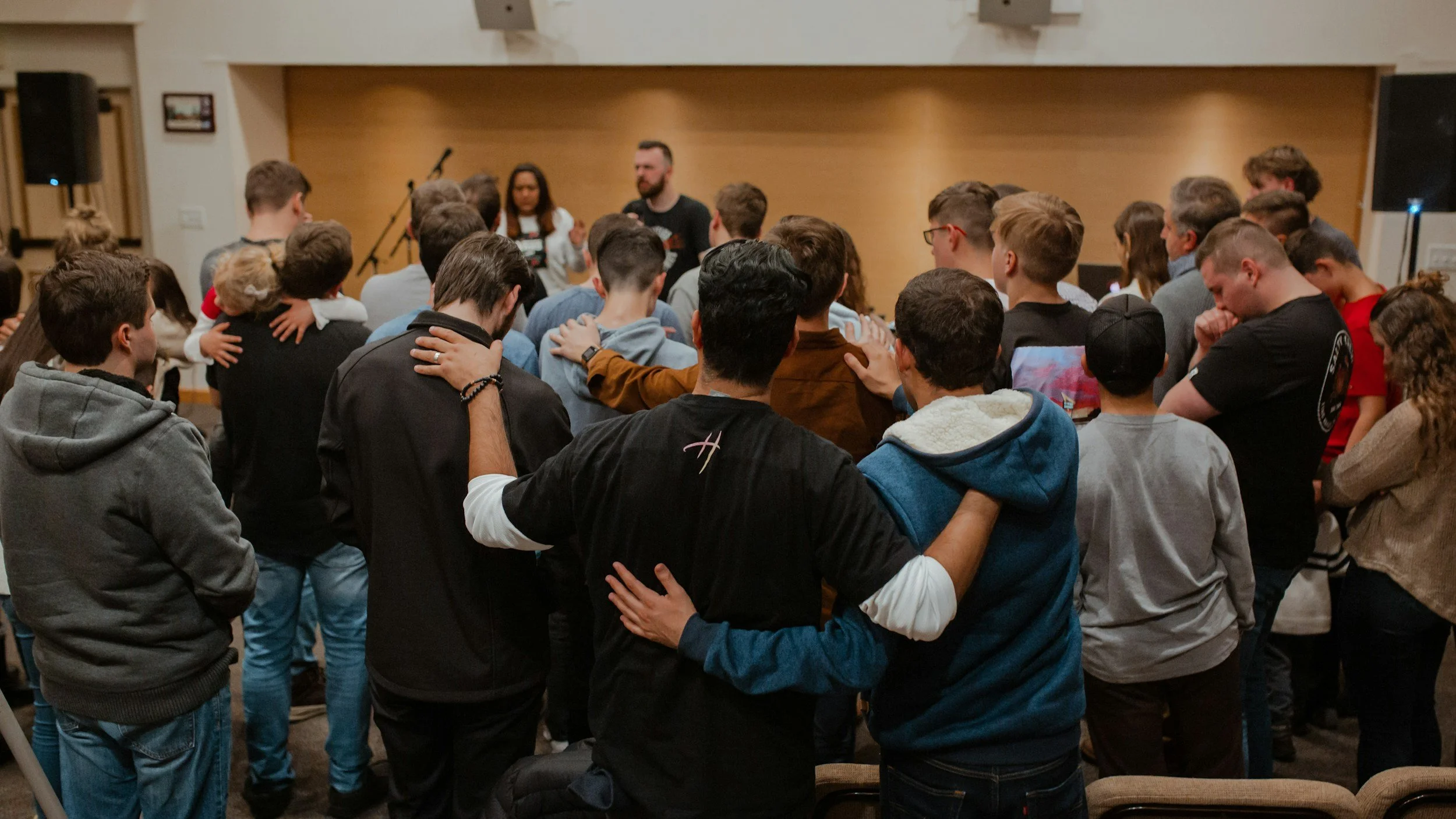
"They gathered the church together and reported all that God had done through them." Acts 14:27
Welcomed Home
When Paul and Barnabas came back to Antioch, they "gathered the church together and reported all that God had done through them," and then "stayed there a long time with the disciples" (Acts 14:27–28). There was room for the whole story, and time to stay. That is coming home at its best: a church that sent them, welcomed them back, listened, and gave them time.
Re-entry support, the last of Pirolo's six, is the easiest to overlook. We prepare people well to leave. We are not always as ready to help them come home.
Welcoming someone home is often simple: a place to stay where they don't have to present or perform, help with a car or appointments, a free evening built into a busy schedule, a meal with no agenda, and someone who asks how they are, not only how the ministry is going.
For those coming home for good, it may also mean helping them find a church family, opening a door to work, or simply staying in touch after the first welcome is over. Being welcomed home doesn't end when the suitcases are unpacked.
Room for the Whole Story
Some of what a global worker carries home needs more than a quick conversation after church. It needs time, safety, and someone who knows how to listen.
That is what debriefing offers: a confidential, unhurried place to tell the whole story, the joys and the losses, and to bring all of it before the Lord. It is not counseling, and you don't have to be in crisis to need it. Often it is the first chance a global worker has had to tell all of it.
None of this requires a large program. It is the everyday side of member care. And if your church would like help building this kind of care into how you receive, send, and welcome home your people, our Church Partnership program can help.
The Battle Behind the Battle
Aaron and Hur were holding up Moses' hands in a real battle, against a real enemy. Many people in ministry know that weariness can be a vulnerable place. Not every hard day is a spiritual attack, but global workers often serve in places of real spiritual darkness, and discouragement and isolation tend to press hardest when they are already worn down. We have written more about this in The Spiritual Battle and the Call for Prayer Covering.
Paul knew this. At the end of his teaching on the armor of God, he didn't tell his friends to try harder. He asked them to pray: "Pray also for me" (Ephesians 6:19).
This year I was able to attend at least two prayer groups here in the US that met for one purpose: to pray for the missionaries their church supports. I found it especially meaningful. It is a beautiful thing to see a group of believers set aside time simply to carry missionaries before the Lord.
Every missionary needs intercessors like that. They pray when a missionary is too tired or too far away to pray well for themselves. They carry needs that may never be shared from a pulpit, and they keep praying long after the visit is over. Like Aaron and Hur, intercessors hold up arms that would otherwise fall.

"He is always wrestling in prayer for you." Colossians 4:12
How to Pray for a Missionary Coming Home
If you aren't sure where to begin, here are a few ways to pray:
For rest. That they would find real rest for body and soul, not just a gap in the schedule.
For freedom to grieve. For what they left behind on the field, and for what has changed at home.
For belonging. That when they aren't sure where they fit, they would be secure in who they are in Christ.
For direction. For those coming home for good, that God would lead them to a church family and meaningful work.
For their children. That missionary kids would find friends, patience, and at least one person who understands.
For wisdom and provision. In decisions, travel, finances, and all the practical details.
For protection. From discouragement and accusation, that they would "stand firm in all the will of God" (Colossians 4:12).
For people who notice. That God would place an Aaron and a Hur beside them.
And then let them know you are praying. That alone can be the encouragement someone needs.
An Invitation to Notice
Aaron and Hur didn't win the battle, and Scripture doesn't record a single word they said. They were simply close enough to see, and willing to stay.
Who has God placed near you whose arms may be growing tired? It might be a global worker coming home to your church this season. It might be a pastor, a ministry leader, a friend, or someone in your own family.
You don't need to fix everything. Send the text. Make the call. Ask to hear the rest of the story. Pray, and keep praying. Open your home or offer a practical hand. Help someone feel known, welcomed, and remembered. You may never know how much it meant. But God may use it to hold someone steady until sunset.
At Compass Asia, we recognize that transitions in ministry are not always easy. Sometimes they come with unexpected grief, unanswered questions, or the challenge of discerning what comes next.
Through debriefing, we provide global workers, couples, and families with a confidential, unhurried space to reflect on their experiences, process both the joys and the difficulties, and prayerfully consider what God may be doing in their lives.
Whether you are preparing for a new assignment, returning from the field, or navigating an unexpected ending, you don't have to walk through that season alone.
Learn More About Debriefing at Compass Asia
Stand With Global Workers
Not everyone can sit across the table from a weary global worker. But you can help make sure someone does.
Compass Asia comes alongside Christian global workers through debriefing and retreats, offering a confidential, unhurried place to process what they have carried, especially in seasons of transition like the ones described here. Much of that care is made possible by people who will never meet the workers they help. Like Aaron and Hur, they have simply chosen to stand beside those who serve.
If you would like to stand with global workers in this way, we would be glad to have you join us as a monthly partner in missionary care.
Through December 31, new monthly gifts will be matched for their first three months.
Are you a global worker in the middle of home assignment or transition? Debriefing offers confidential, unhurried time to process the season you have been carrying. We will meet you where you are.
Frequently Asked Questions
Q: What does Exodus 17:12 mean?
A: During Israel's battle with the Amalekites at Rephidim, Moses stood on a hill with the staff of God in his hands. When his hands grew tired, Aaron and Hur placed a stone under him to sit on and held up his hands, one on each side, until sunset. The victory came from the Lord, and the passage shows God working through a weary leader and the people who stayed beside him.
Q: Why can coming home be hard for missionaries?
A: Many missionaries look forward to coming home, but often find that life has moved on and that they have changed too. Common struggles include reverse culture shock, grief and homesickness for the place they left, loneliness, loss of identity, children's adjustment, and practical pressures such as housing, cars, insurance, and schools. Home assignment can also bring a full schedule of church visits and support raising. Because few people expect coming home to be hard, many carry it quietly.
Q: What do missionaries face when they come home for good?
A: Missionaries who retire or resettle after years overseas often enter a long season of transition. Many are looking for a church where they can belong, searching for work, and relearning everyday life in their passport country. Beneath the practical questions is often a deeper one about identity, since for years they were known by their calling. Grief for the people and places they left is common, and it can take time to feel settled.
Q: What do missionaries need when they come home?
A: Many missionaries come home weary and need rest before anything else: real time to stop without having to present or report. They also need encouragement, people who ask how they are doing and want to hear the whole story, practical help with housing, transportation, and appointments, and partners who stay connected through the whole term. Those coming home for good may also need help finding a church family and work. In Exodus 17, Aaron and Hur gave Moses a stone to sit on and held up his hands until sunset, a picture of the rest and steady support missionaries need.
Q: How has the way churches support missionaries changed?
A: A generation or two ago, many missionaries planned to serve for life, and churches supported them mainly through denominations and mission agencies. Today, short-term mission trips are a regular part of church life, many churches focus their support on fewer, deeper partnerships, and missionaries are sent from many nations, not only the West. These changes have brought real good, but missionaries whose work cannot host teams can be overlooked. In a 2024 Lifeway Research survey, 84 percent of Protestant pastors said their church prays for missionaries at least monthly, but only 17 percent had sent anyone to serve ten weeks or more in the past year.
Q: What is the difference between a sending church and a supporting church?
A: Supporting churches and individuals give, pray, and stay in touch with a missionary. The sending church is the missionary's home church and spiritual family. It commissions them, provides shepherding and oversight, cares for their spiritual, personal, and financial needs, and often serves as their home base during furlough. The missionary, in turn, stays accountable and takes part in church life while home (Acts 14:26–28).
Q: What are the six areas of missionary support in Serving as Senders?
A: In Serving as Senders, Neal Pirolo describes six areas of care missionaries need: moral support, logistics support, financial support, prayer support, communication support, and re-entry support. He draws this picture of care from Paul's partnership with the church in Philippi.
Q: Why do missionaries need people to pray for them?
A: Scripture describes gospel work as meeting spiritual opposition (Ephesians 6:12), and Paul repeatedly asked churches to pray for him (Ephesians 6:19, Romans 15:30). He said that God would deliver him as believers helped by their prayers (2 Corinthians 1:11). Intercession is a real way of sharing in the work, even for those who never go overseas themselves.
Q: How can churches care for missionaries on home assignment?
A: Simple, practical care often means the most. Churches can offer a restful place to stay, help with practical needs, build free time into a visit, ask how the global worker is doing personally and not only about ministry, and stay in touch after they return to the field. Consistent care over time matters more than a single large gesture.
Unless otherwise noted, Scripture quotations are from the Christian Standard Bible®, Copyright © 2017 by Holman Bible Publishers. Used by permission. Christian Standard Bible® and CSB® are federally registered trademarks of Holman Bible Publishers.
Scripture quotations marked NIV are taken from the Holy Bible, New International Version®, NIV®. Copyright © 1973, 1978, 1984, 2011 by Biblica, Inc.™ Used by permission. All rights reserved worldwide.